Irene Medina
![]()
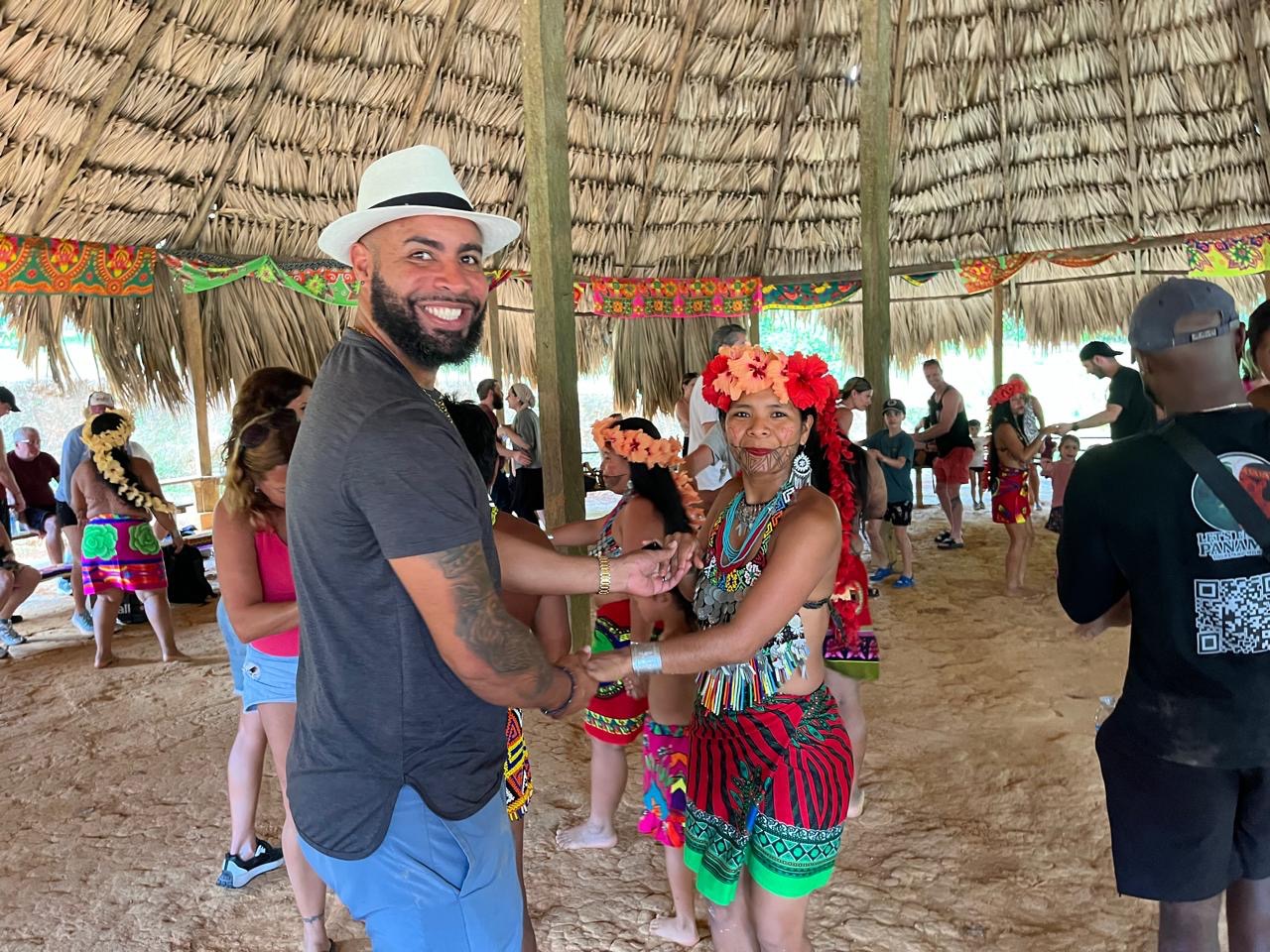
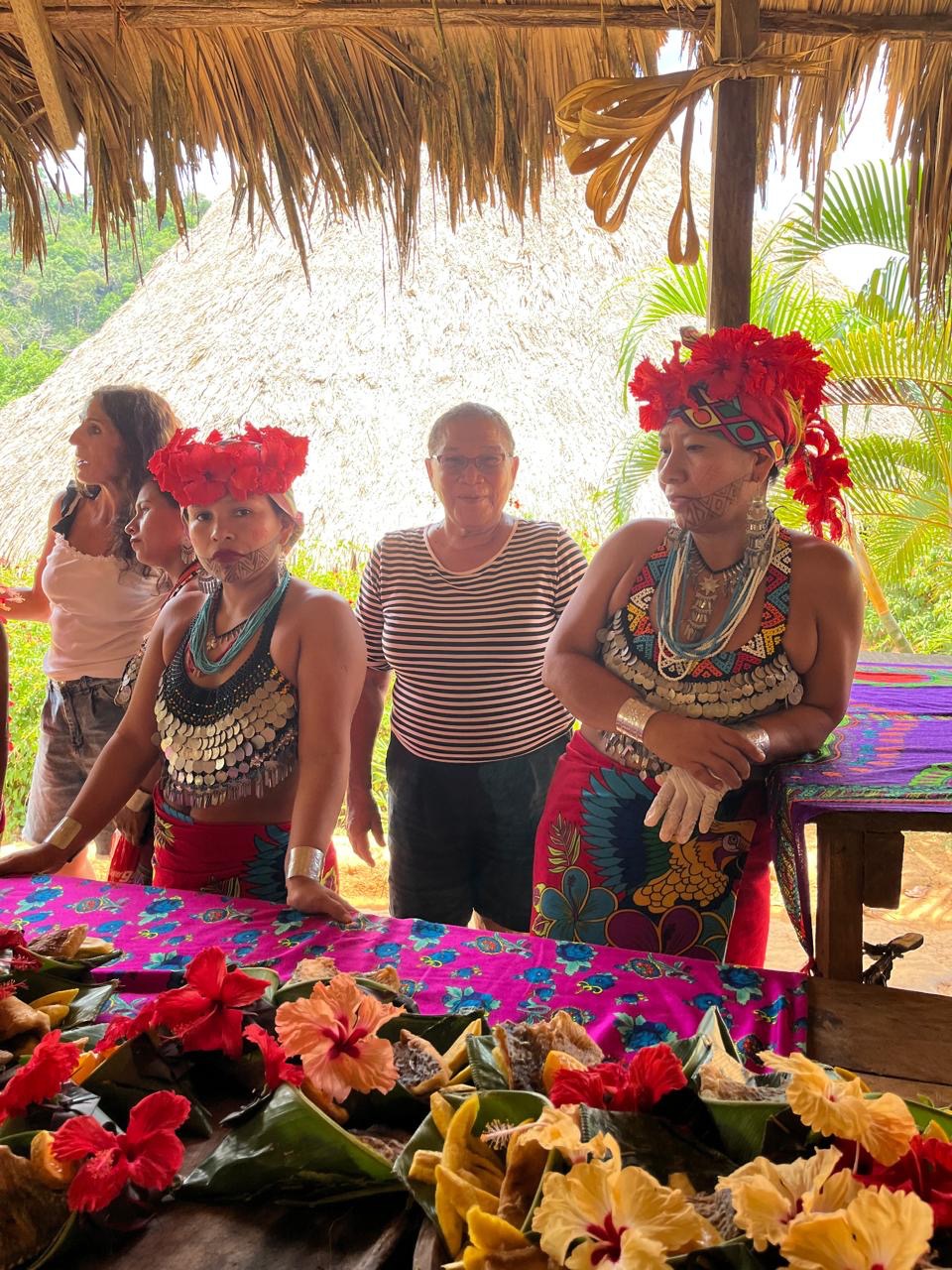
It felt like a homecoming. The canoes. The traditional dress. The pigmented tattoos. The floral headdresses (from the hibiscus flowers) and the fireside cuisine.
It was an emotional moment for me when I first met the Emberá people on March 9th 2026 at the Chagres National Park, Panama.
Something stirred – a memory threaded back centuries ago when my ancestors first walked in the Caribbean region.
My Amerindian name is Nacali and I am a member of the Santa Rosa First Peoples community in Arima. I don’t really know which tribe I descended from, but the community speaks about the Nepuyos and Warao, the Arawaks and the Caribs. The colonisers left decimated people with little knowledge of language or culture - still 600 years later our spirit still lives.
Panama borders the Caribbean sea to the north and the Pacific Ocean to the south but it is located in Central American. Its location cross paths to many cultures.
I watched my grandson Zayne leaning over the side of the panga, with one hand touching the cool waters, causing it to lift slightly into the air as a huge smile lit up his face. He was held protectively on his father’s lap. It was truly a soul touching moment. I borrowed the word panga from an article written by Julia Henriquez entitled “ The People of the River” dated March 2026 in the Panorama De Las Americas magazine from the Copa Airline flight back home.
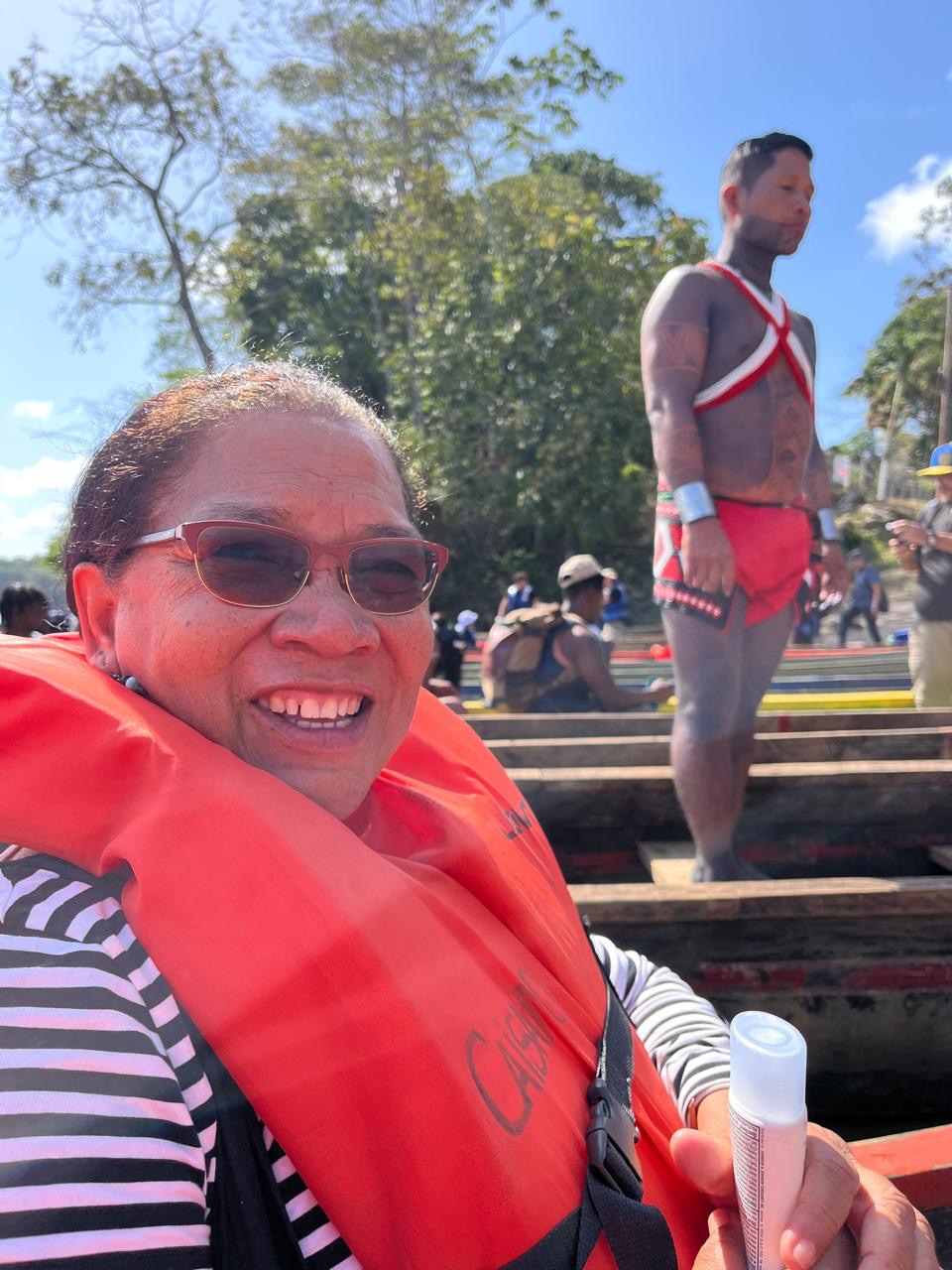
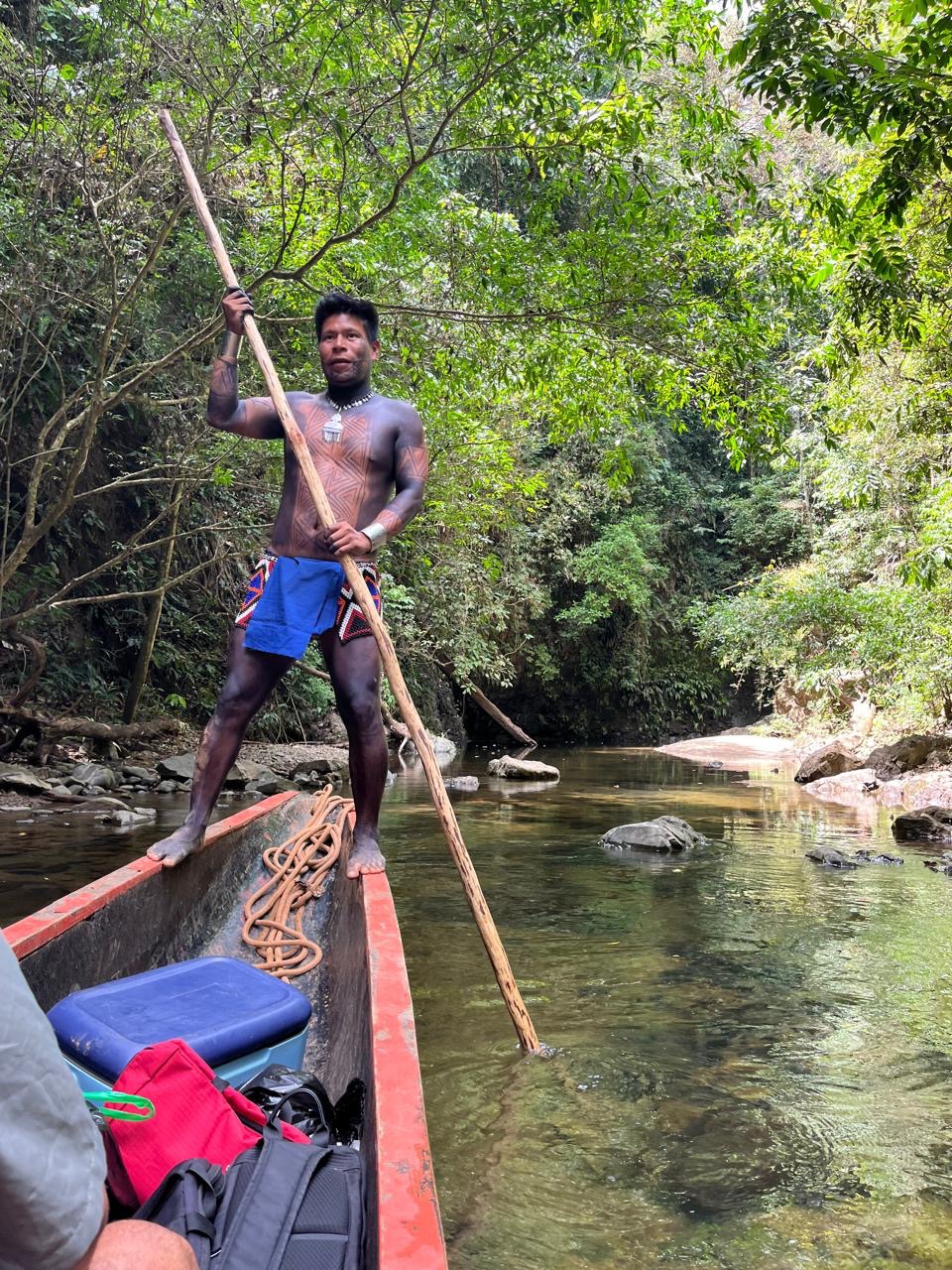
As my family and I stepped into the panga (canoe) and began the short journey on the River Chagres en route to the Emberá community, the journey felt familiar.
The moment I saw my Indigenous brothers with their tattooed bodies and beaded skirts standing next to their canoes I felt as if I had stepped back into an earlier world. These pangas as they are called were powered by engines rather than steered by oars, but they invoked both cerebral and visceral memories...
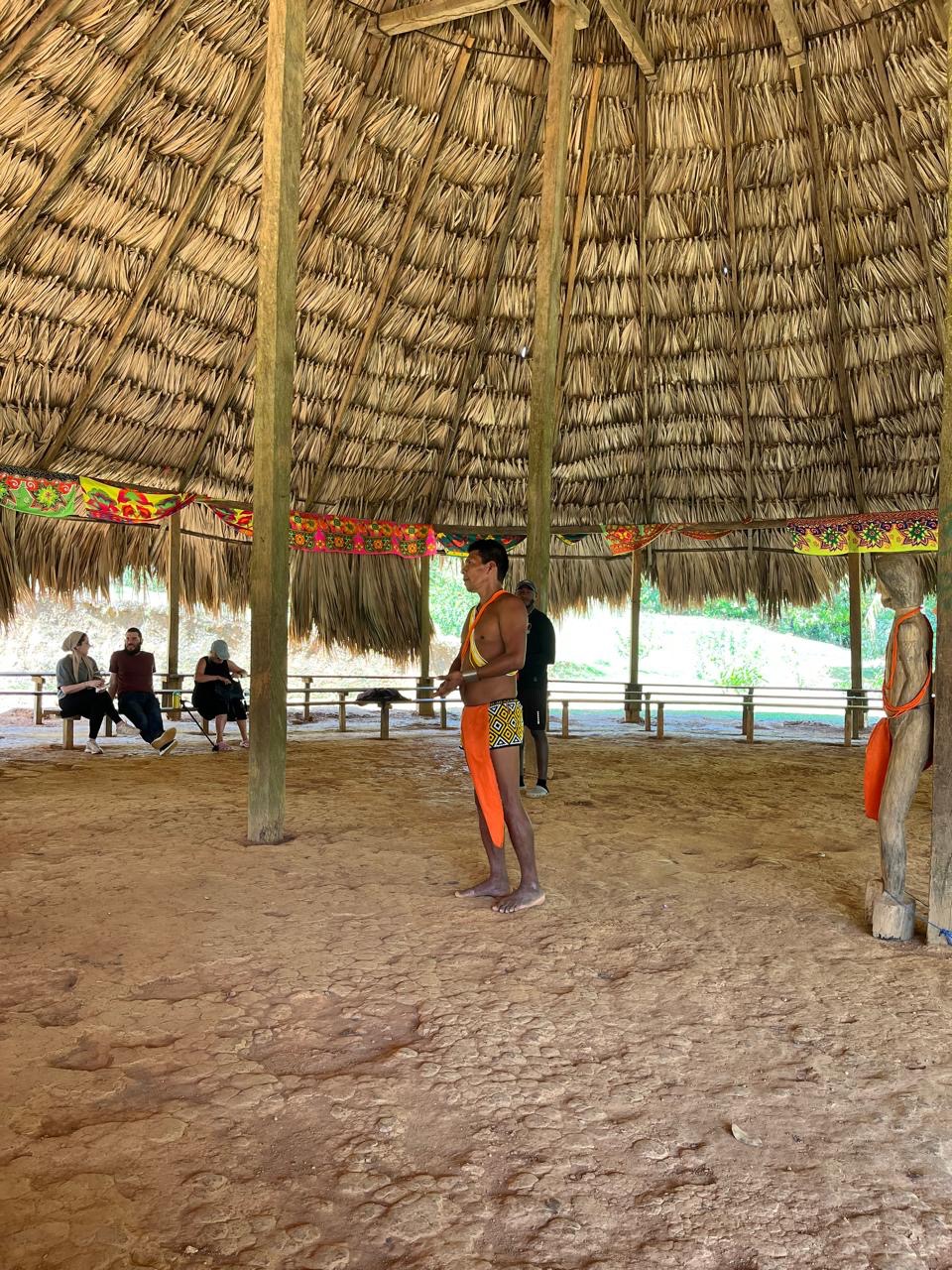
I learned a lot during that six-hour long tour. During the welcome speech made by the leader of the community, and former Cacique, I asked about the significance of the body paints.
The black intricate tattoos on the body did not just signify a work of art but also communicated social messages like whether the tribe member was married or was still on the market for a mate. The ink is drawn from natural plants and lasts for a period of ten days. Time was limited so I could not get one done on my arms.
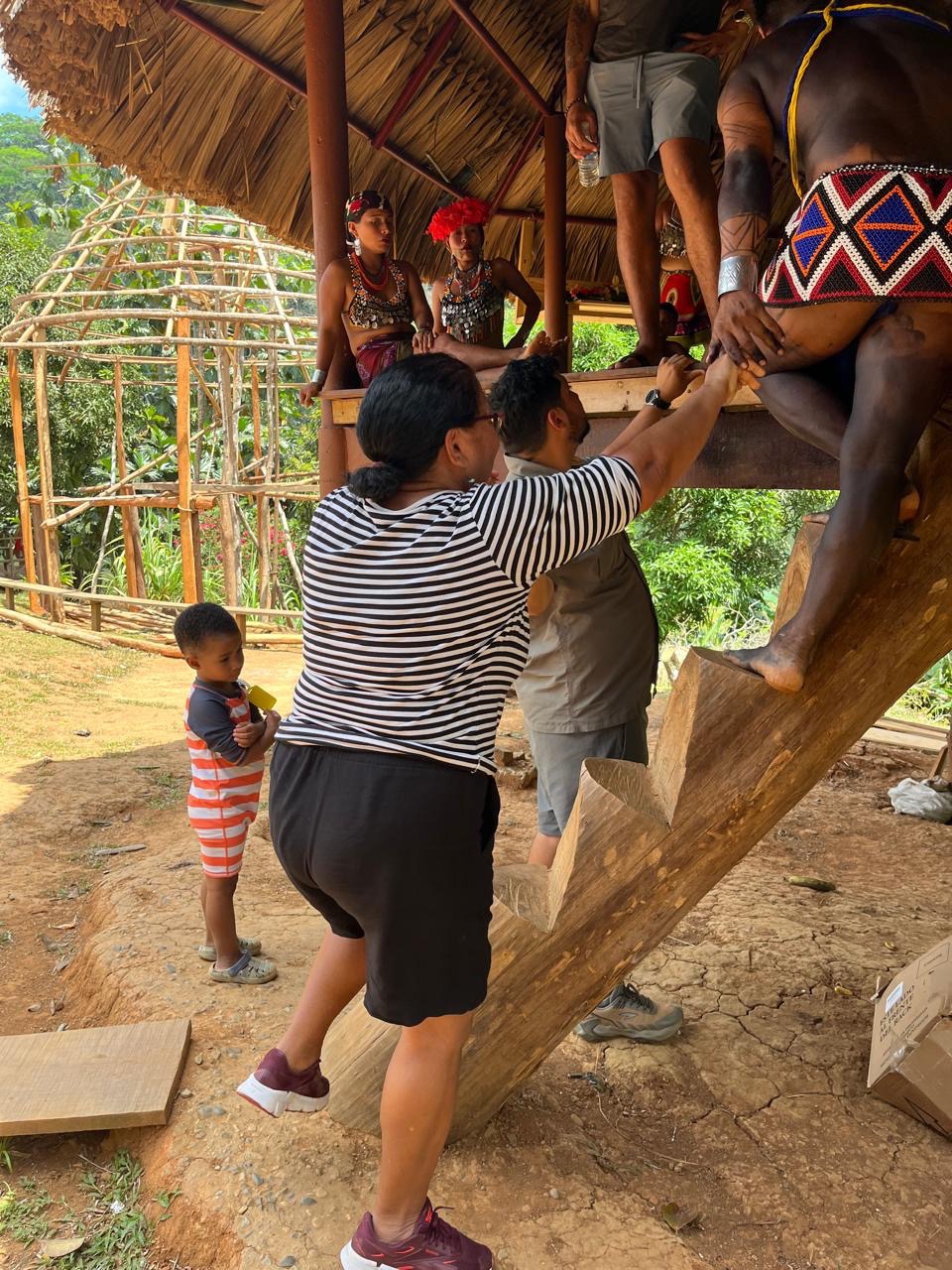
I learnt about their electoral system, where a Cacique is chosen every five years and about the powers of the Cacique. I learnt about their system of punishment, their education system, their thatched, wooden houses that are built high off the ground to mitigate floods and animals who may roam their villages and gleaned a little knowledge of their lives on a nature reserve.
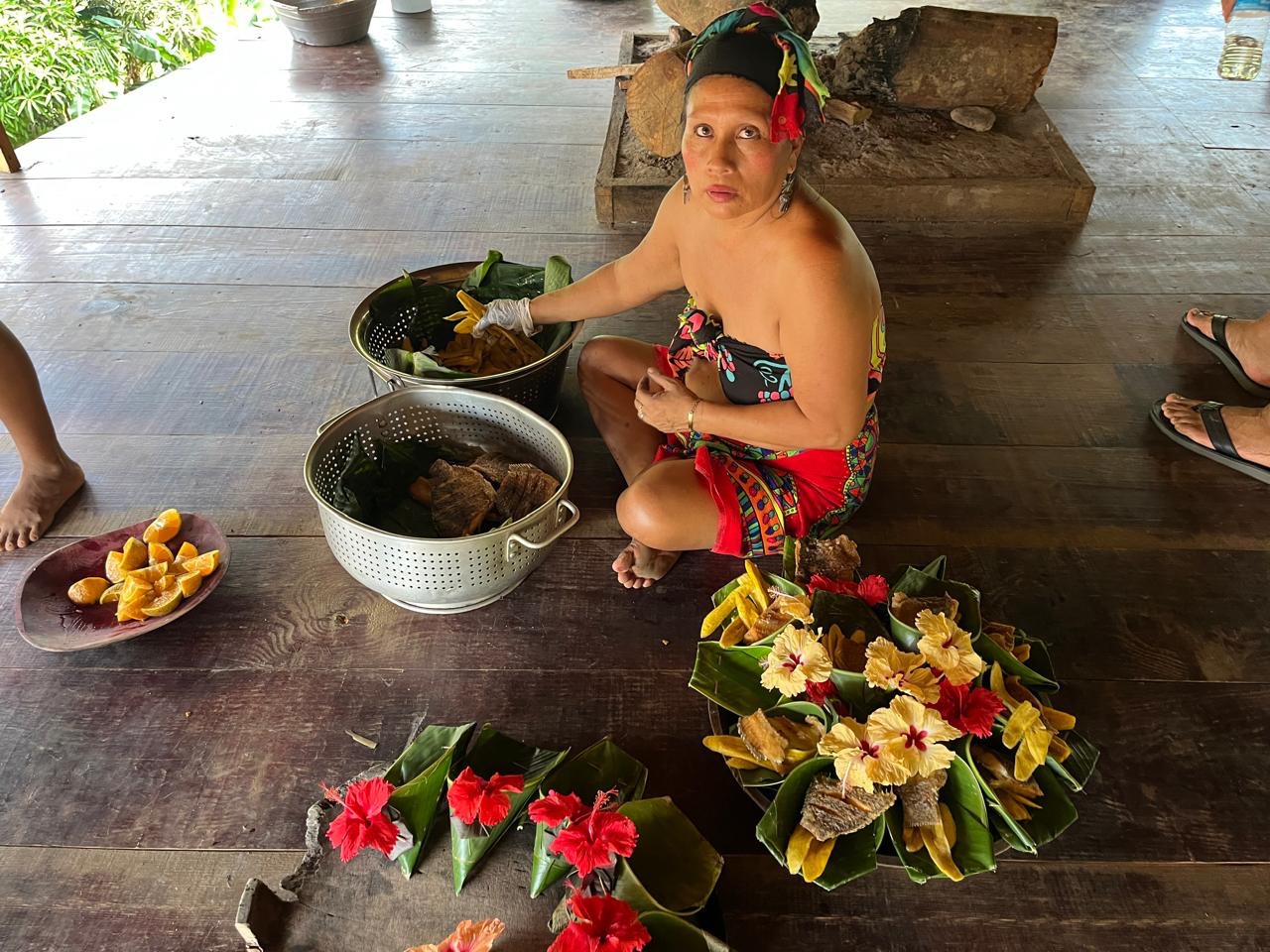
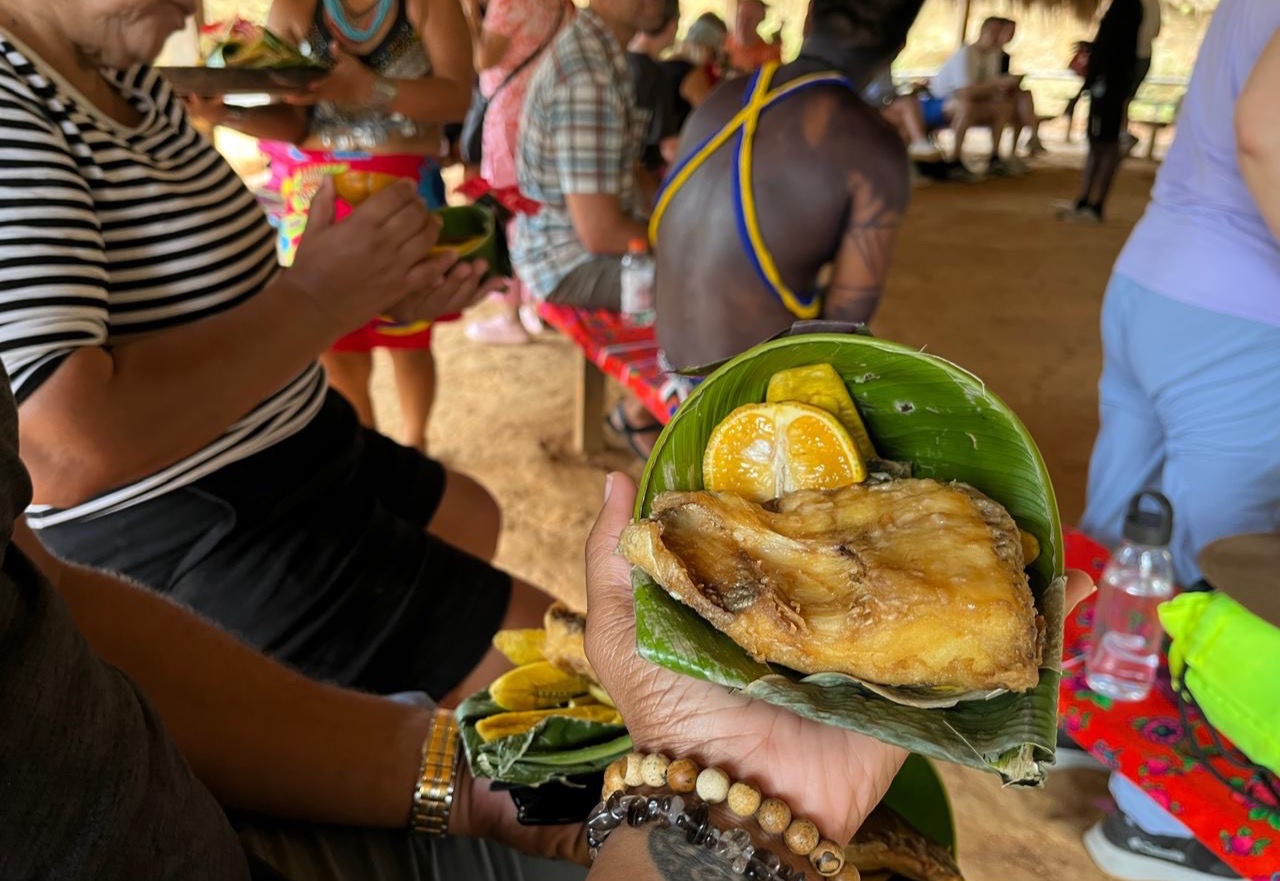
I thoroughly enjoyed lunch which consisted of tilapia fish (caught right there in the Chagres River) which was either roasted or fried very dry, but whose meat retained softness and moisture. This was served with half ripened plantains in a cone like wrap of fig leaves. There was also fried or roasted chicken and lightly salted cassava chips.
Fruit slices of watermelon, pineapples, and passion fruit cut in halves were nicely served on fig leaves decorated by hibiscus flowers. A wooden bowl of water with crushed leaves was provided for us to wash our hands as we served ourselves pieces of fruits.
Then came a tour of the village, where our native guide explained the uses of several of the plants we saw, including a (a natural birth control) tree which helped women who were experiencing reproductive issues – either wanting to have babies or to stop having babies and the nooni tree whose fruit can be used for various ailments.
I was also fascinated to learn that there is a species of flies which produces honey. The Emberá people speak their own native language, as well as Spanish.
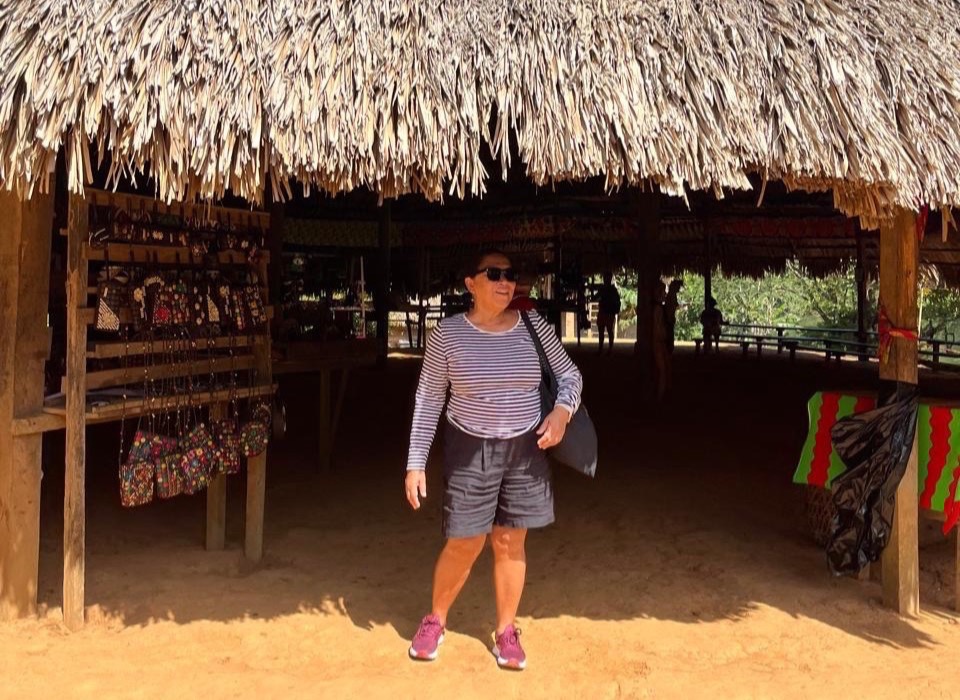
As our tour came to an end shortly after purchasing some of the indigenous craft and art work produced by the community, we boarded our canoe back, this time to visit a beautiful water fall within the reserve.
The water was icy and refreshing and Zayne, and his parents swam and waded in the beautiful water for about 15 minutes. This experience reminded me of my own village in Mt Pleasant, Arima, and my childhood days of bathing and washing in the river.
Then it was time to leave.
It was a day so beautifully spent. On the way our tour guide called out to a tribal member who was fishing in familiar terms, and we waved to him goodbye, as he too became a part of my memories of the day.
I say “bio bio” or simply thank you to the Emberá people and to our Indigenous guide “Emama” which means Tiger.
Special thanks also to Orlando for being such a warm, professional, decent and patient tour operator. Maybe I will never cross paths with the Emberá people again, but our spirits have touched and that’s enough for me.

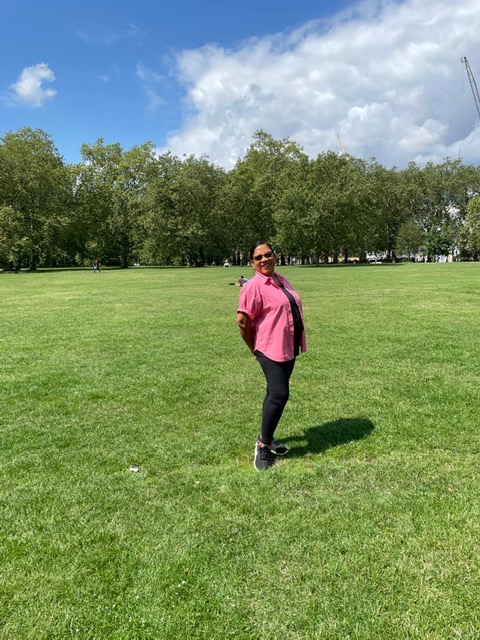
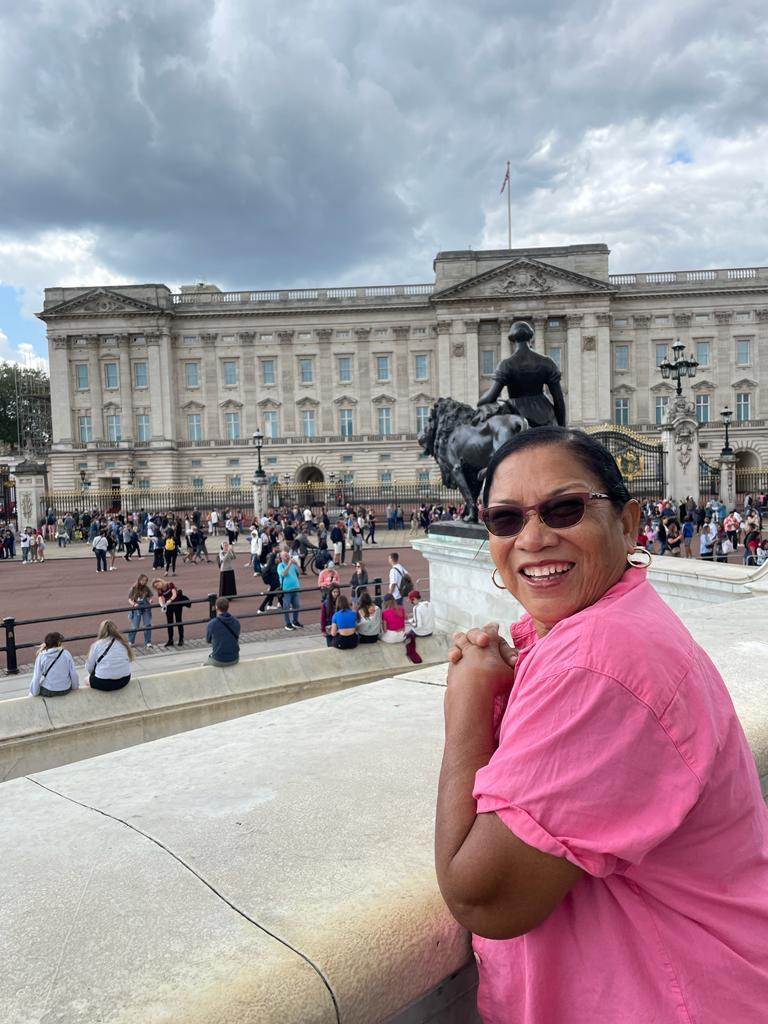
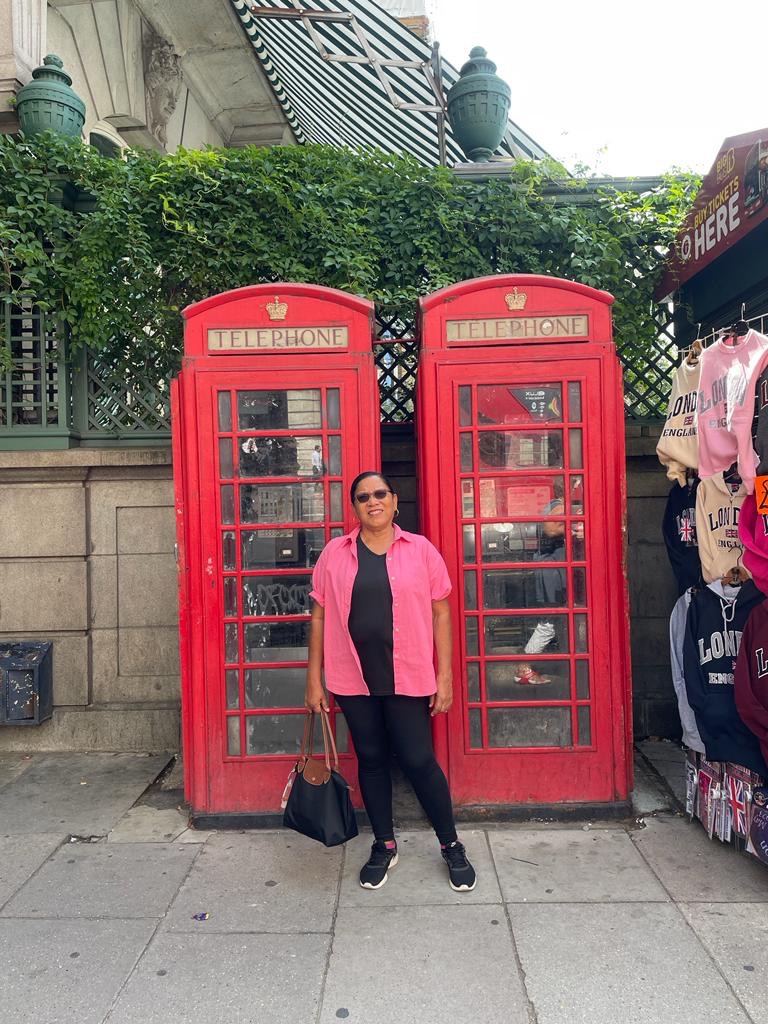
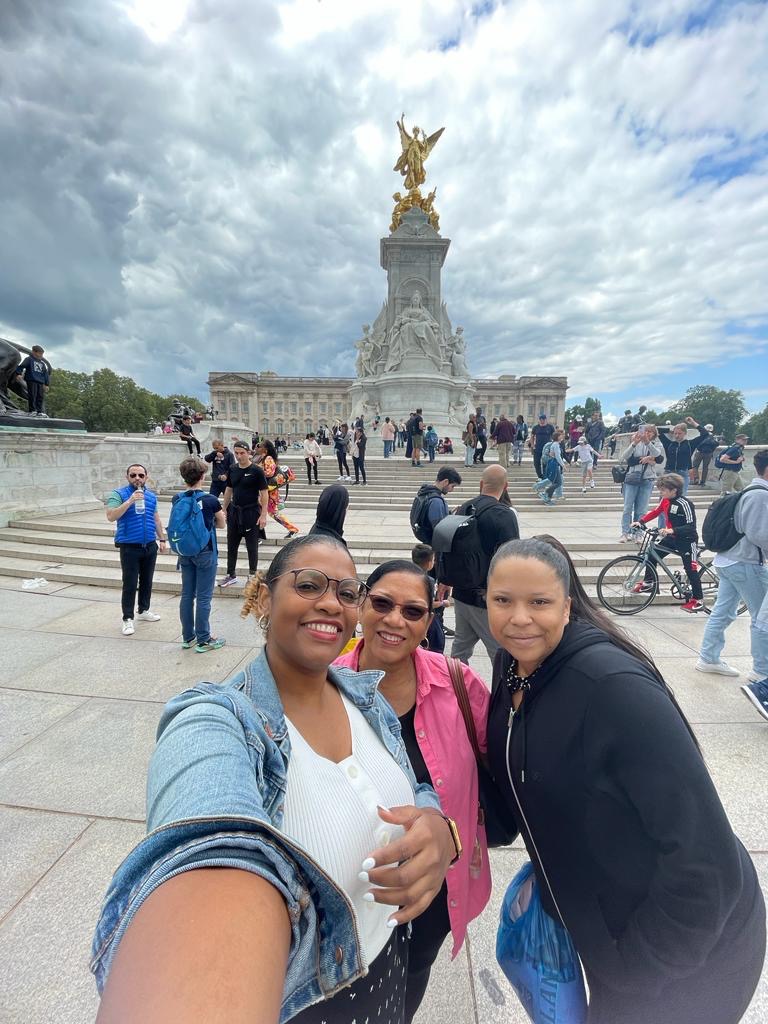
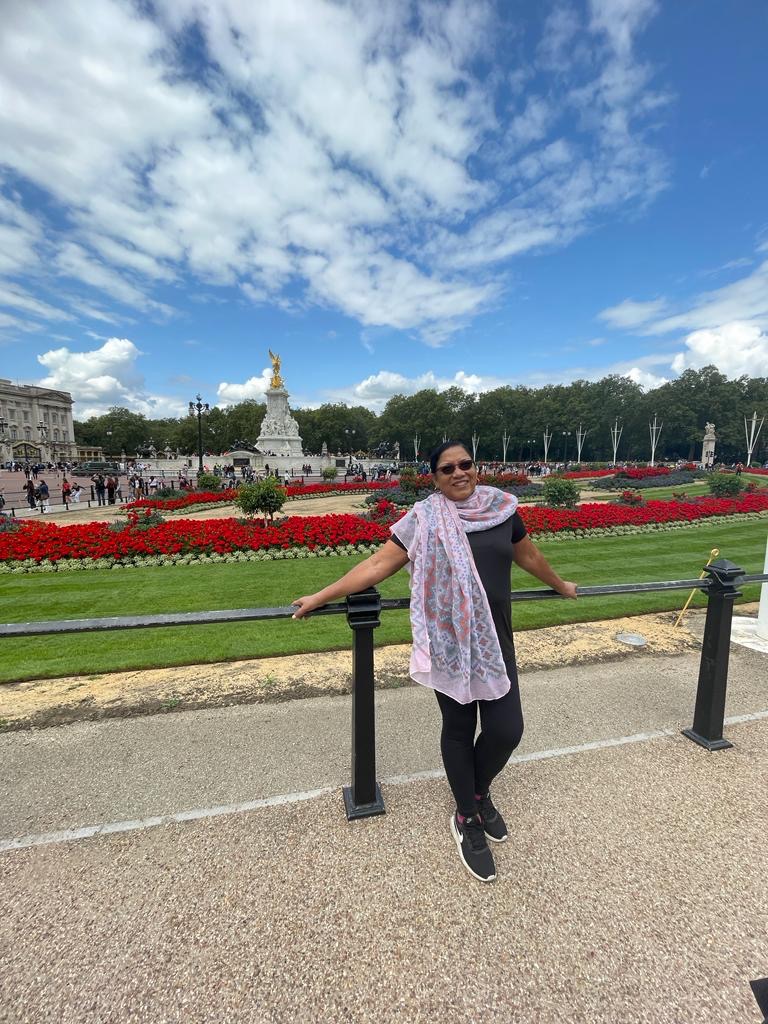
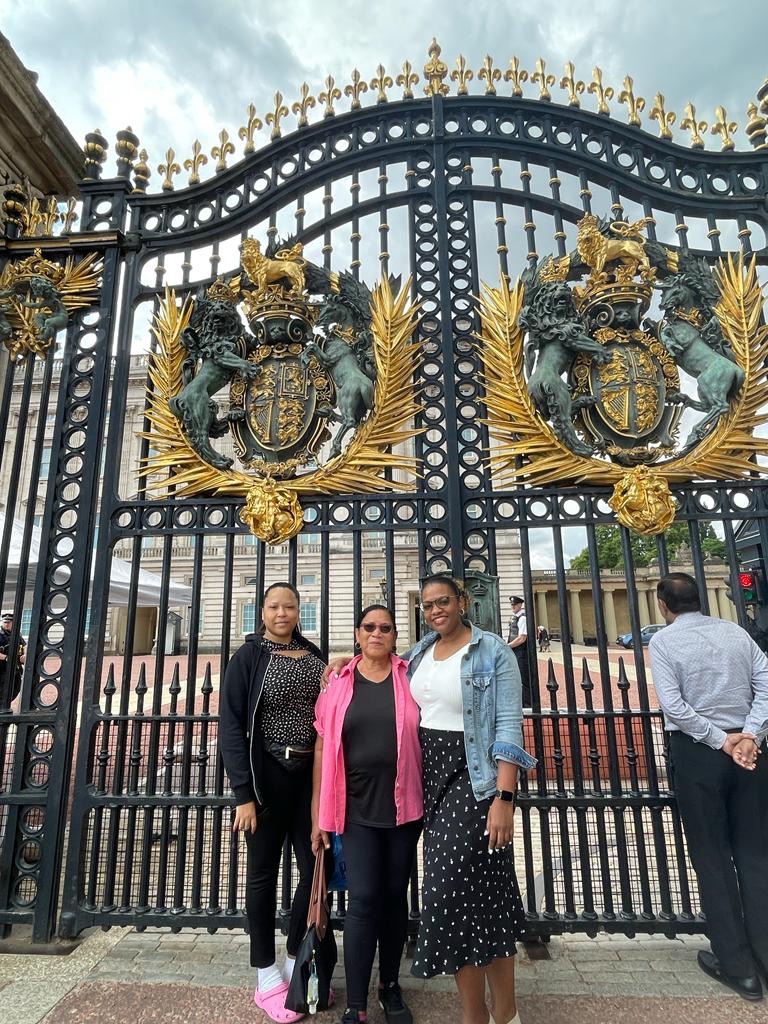
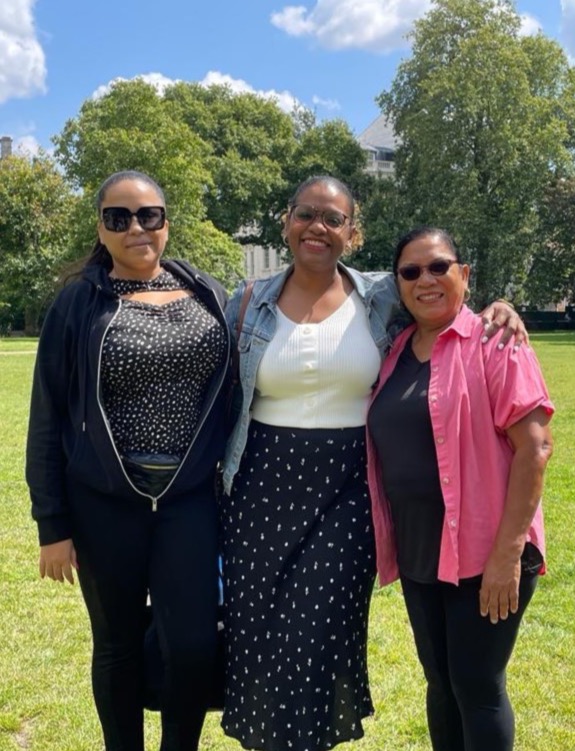
What a beautiful day in London today! Vacations are for rest, relaxation, new adventures and creating lovely memories. So today was Big Ben, Buckingham Palace, 10 Downing Street and the Cabinet War Rooms, and, of course posing with the iconic Red Telephone Booths. The last one is for the history books. Hoping to catch some more sights during this brief stop over before heading to Italy where more adventures await! All the serious stuff at home can wait a bit longer. Special thanks to my travel mates; my beautiful daughter Allyson and granddaughter Chelsea.